When Cyber Becomes Physical: Building Strategic Resilience in Critical Infrastructure.
The intersection of digital vulnerability and physical reality is reshaping the enterprise risk landscape. Across the globe, sophisticated adversaries are no longer merely targeting corporate databases to extract data or ransom financial assets; they are actively pre-positioning within the operational technology (OT) systems that control physical world functions. For Chief Information Security Officers (CISOs) and Chief Information Officers (CIOs), this evolution changes the stakes entirely. When a cyber attack can directly trigger a physical consequence, disrupting power grids, halting manufacturing lines, or crippling transport links, cybersecurity ceases to be a localised IT concern and becomes a core matter of societal continuity and board-level liability.
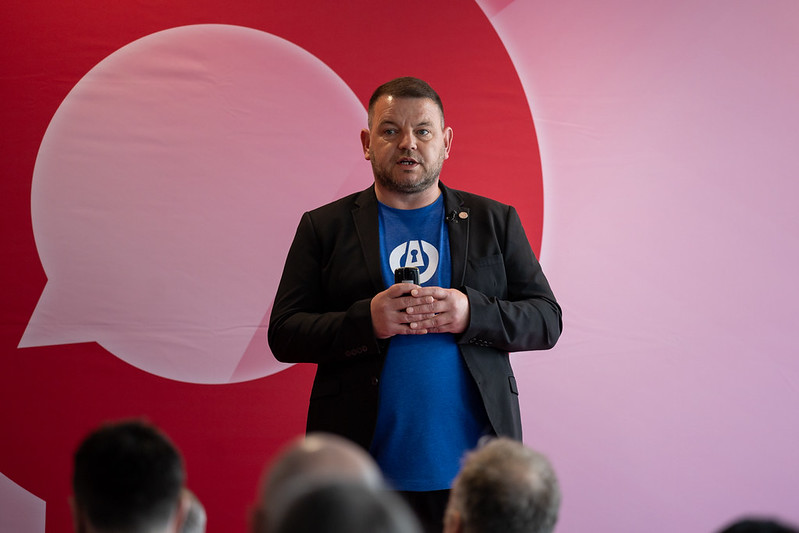
At a recent industry briefing hosted by Inspired Business Media, Magpie Graham, VP of Strategic Intelligence at Dragos, analysed the geopolitical levers driving modern infrastructure attacks and provided a non-technical governance framework to help security leaders communicate OT resilience directly to the board.
The Geopolitical Reality of Industrial Leverage
Targeting critical national infrastructure (CNI) is fundamentally an exercise in strategic leverage. In contemporary geopolitical conflicts, disruption is a highly attractive tool for nation-state adversaries: it is cheap, deniable, asymmetric, and capable of exerting maximum operational and political pressure without triggering conventional military escalation.
While individual threat groups exhibit distinct operational signatures, such as Russia's focus on deniable sabotage against European states, China's systemic pre-positioning for future crises via groups like Volt Typhoon, or Iran's opportunistic retaliatory strikes, security leaders must focus on their shared strategic target. Adversaries have systematically concluded that critical infrastructure is fair game, and they are aggressively investing in the capability to weaponise it.
Importantly, this exposure is not confined strictly to utility companies. If an organisation operates any physical environment at scale, such as manufacturing plants, logistics networks, facilities management, telecommunications, or healthcare estates; or if it exists as an upstream supplier or downstream dependent of CNI, these geopolitical pressures instantly become its own business continuity problem.
Anatomy of an Industrial Attack: The 5 Strategic Losses
To communicate the severity of OT risk to board members without getting bogged down in engineering jargon, security leaders should frame the conversation around five distinct operational losses that occur when cyber attacks transition into physical spaces:
- Loss of View: Human-Machine Interfaces (HMIs), SCADA dashboards, and alarm panels are compromised, leaving operators blind or unable to trust the visual reporting data of the physical processes.
- Loss of Control: Commands issued by operators are intercepted, modified, or blocked entirely. The operator can see a physical deviation occurring but is powerless to transmit corrective instructions to the field controllers.
- Loss of Protection: Adversaries deliberately manipulate safety systems and protection relays; the very mechanisms designed to prevent catastrophic hardware failures, power surges, or human operational errors.
- Loss of Safe State: The industrial environment is altered so that it can no longer cleanly fall back to a known, automated safety baseline, removing the ability to safely pause operations.
- Loss of Recovery Confidence: Even after the perimeter is secured and the adversary is expelled, leadership cannot quickly verify when it is safe to restart the facility. Rebuilding trust in the integrity of controller logic and firmware can take weeks of manual validation rather than hours of digital restoration.
This cascading effect was starkly highlighted by a late-2025 destructive cyber attack targeting over 30 wind, solar, and manufacturing facilities across Poland. While the grid maintained stability without causing a national blackout, the incident proved that nation-state actors are actively manipulating frontline physical devices during high-stakes geopolitical windows.
The CISO's Mandate: 5 Verbs for Boardroom Governance
Bridging the gap between the technical reality of an industrial facility and corporate risk oversight requires moving away from traditional IT compliance checklists. Security executives can organise their OT strategy around five key pillars, asking deep questions of their teams and supply chains:
- See It: Move past standard IT discovery to build a definitive map of high-value OT dependencies. Which engineering workstations and remote access paths directly support your most critical physical services, and which external vendors hold active connections to them?
- Isolate It: Segment the network based on physical consequence rather than organisational charts. Are critical automated functions isolated from commodity IT compromises, and can the plant successfully drop into a manual mode of operation if connectivity is degraded?
- Govern It: Treat third-party pathways as major blast-radius multipliers. Are vendor access paths strictly time-bounded, monitored, and legally bound to strict incident notification timelines?
- Rehearse It: Avoid treating an OT incident like a standard IT data breach. Have your executive, legal, communications, and engineering teams collectively practiced cross-functional war games where cyber isolation protocols and safety mandates inevitably collide?
- Recover It: Plan for a time-based race against public confidence. Do you possess isolated, trusted controller configurations and clean engineering workstation images to completely rebuild trust in your architecture faster than customer tolerance expires?
Shifting from Compliance to Audible Governance
Ultimately, industrial cyber resilience is an issue of audible governance and operational survival. As regulatory frameworks in both the UK and Europe tighten around supply chain assurance and critical entity accountability, matching your cyber defense posture to your physical consequence is no longer just a best practice, it is a boardroom obligation. By shifting the defensive narrative from abstract software patches to real-world business continuity, security leaders can confidently secure the resources required to defend their industrial footprint.
To learn more about the evolving infrastructure threat landscape and building operational resilience, discover upcoming sessions by viewing the Inspired Media events calendar.