Mind the Execution Gap: Why What You Build Matters Less Than What You Can Do Under Pressure - TryHackMe
When a major cyber incident hits, the difference between a successful containment and an operational catastrophe rarely comes down to budget or technology. Most enterprises look remarkably similar on paper: they deploy the same top-tier Endpoint Detection and Response (EDR) platforms, fund ongoing certification paths, and maintain meticulously cataloged incident response playbooks. Yet, when real-world pressure is applied, some teams collapse into paralysis while others execute flawlessly.
This disparity highlights a systemic vulnerability in modern risk management: the execution gap, the distance between what an enterprise has built on paper and what its team can practically execute in the middle of a crisis.
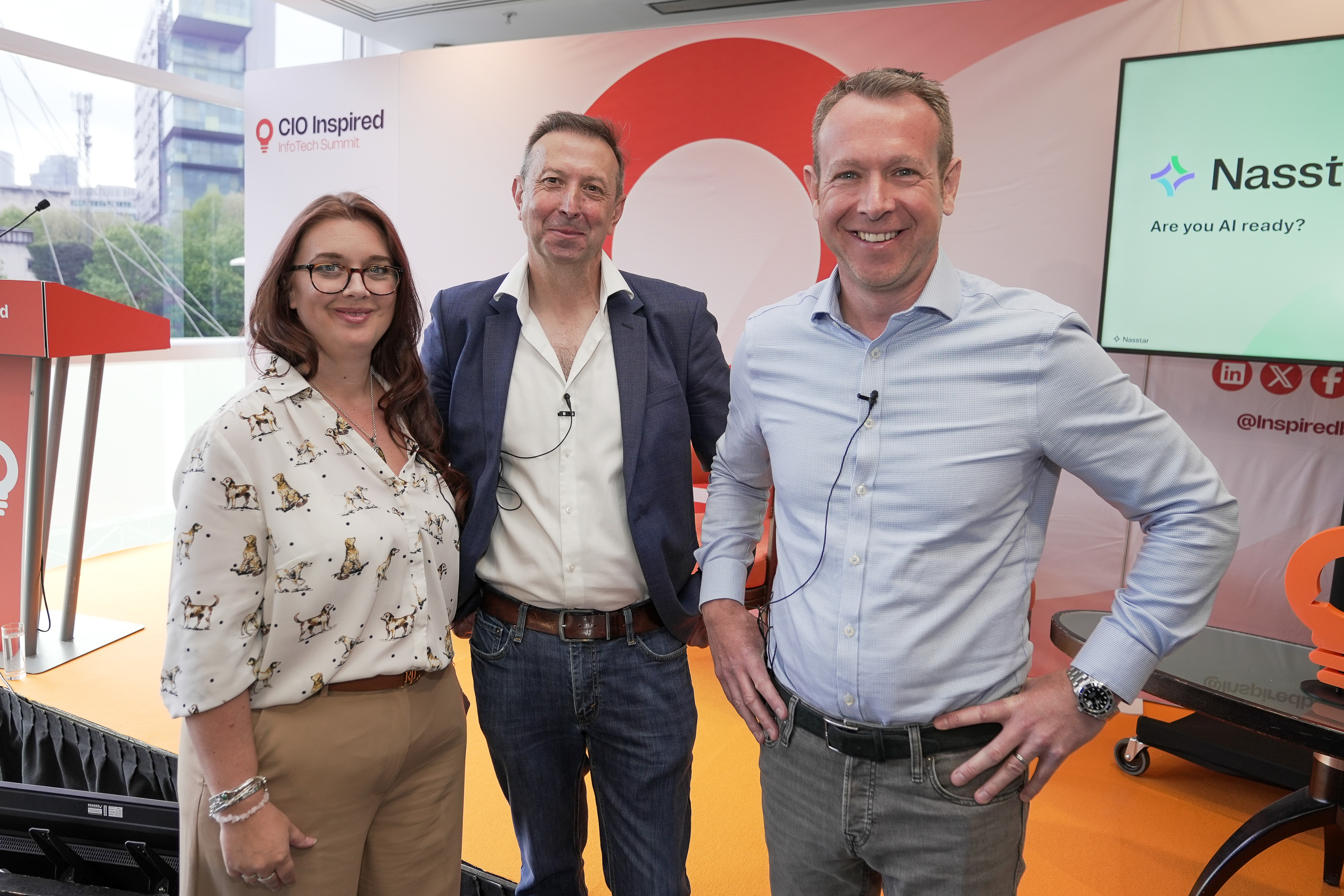
At a recent industry briefing hosted by Inspired Business Media, Tennis, Head of Consultancy at MWR and a principal defensive strategist at TryHackMe, explored why standard compliance metrics create a false sense of security and how the introduction of Artificial Intelligence risks widening, rather than closing, this organisational chasm.
Anatomy of a Functional Failure
The reality of the execution gap is best understood through a live crisis. During a recent engagement with a compromised financial services provider, incident responders discovered a threat actor maintaining persistence deep within the core banking backend using Active Directory service accounts. The technical solution was clear: execute a highly disruptive domain takeback to flush the adversary out.
On paper, the organisation was fully prepared. They had spent years running standard tabletop exercises and possessed formal, documented playbooks detailing this exact scenario. Yet, when the time came to pull the trigger, the Crisis Management Team (CMT) remained paralysed for two weeks. Because no one in the room could clearly map the technical action to its precise business and operational impacts, leadership refused to authorise the move. This execution failure forced the security team into an exhausting, two-month game of whack-a-mole while the adversary retained access.
This scenario is far from unique. Data from a 2026 Signia survey of 600 senior security decision-makers reveals a stark industry contradiction: 99% of organisations have a formal incident response plan, yet 73% of CISOs admit their teams would struggle to execute effectively under the pressure of an immediate attack.
"The execution gap isn't a failure of budget or tooling; it's the distance between having a playbook on SharePoint and having a team empowered to act on it when the clock is ticking."
The Five Dimensions of the Execution Gap
Through assessing security operations centers (SOCs) across a broad spectrum of industries, TryHackMe's SOC maturity research indicates that the execution gap systematically manifests across five structural pillars:
- People and Culture: While standard certification tracks exist everywhere, training does not automatically equal readiness. Teams trained heavily in a volume of classroom coursework or a single specific tool often flounder when forced to pivot to unfamiliar, edge-case technologies during a live breach.
- Processes and Procedures: Organisations frequently boast documented playbooks for every threat scenario. However, documentation does not guarantee execution. Playbooks are routinely written for idealised corporate structures or sit unread on corporate networks without ever enduring intense, real-world pressure testing.
- Technology: Security leaders regularly over-invest in the latest SIEM and SOAR platforms, yet fall short on configuration. Deploying a shiny tool without aggressive, organisation-specific tailoring inevitably triggers alert fatigue, causing analysts to ignore up to 63% of all incoming telemetry.
- Testing and Validation: Running annual penetration tests or generic tabletop exercises creates a false metric of improvement. Too often, exercises simply generate a static report that sits on a shared drive, capturing the exact same recurring architectural flaws year after year without driving real change.
- Measurement and Metrics: Maintaining a green dashboard that displays perfect Service Level Agreement (SLA) metrics masks actual vulnerability. Tracking volume and adherence to arbitrary timelines is not the same as taking meaningful action based on data, leaving boards blind to true financial and operational risk.
The AI Paradox: Force Multiplier or Risk Amplifier?
Faced with these structural gaps, many enterprise boards are turning to Generative AI as a technological silver bullet. However, placing advanced automation on top of an unverified process does not close the execution gap, it accelerates its consequences.
AI is an exceptional task-level optimiser. Peer-reviewed data from late 2025 shows that specialised phishing triage agents can increase true positive detection by up to 6.5 times per analyst. But this speed introduces severe cognitive vulnerabilities if the underlying team dynamics are weak.
Rigorous productivity and behavioral studies reveal a dangerous perception gap: developers utilising AI tools were measured to be 19% slower, yet fundamentally believed they were 25% faster. When this 39-point gap between perception and reality is introduced to a security team, it collides with a documented 47% automation bias; the systemic tendency for human analysts to over-trust automated tool readouts.
If a SOC’s foundational workflows are broken, AI will simply generate wrong answers with higher confidence, breaking operations at scale. Furthermore, according to 2025 IBM data, while mature organisations extensively utilising AI saved an average of $1.9 million per breach, 97% of enterprises hit by an AI-related breach lacked basic AI controls, with unmanaged "Shadow AI" adding an average of $670,000 in additional breach costs.
Closing the Gap: Frame Over Framework
Mature organisations do not achieve resilience by chasing the next shiny technology box or switching EDR vendors every software cycle. Instead, they focus heavily on custom-tailoring their existing security stacks to their unique threat landscapes; sometimes running the same core tools for over a decade while obsessively refining their internal alerting configurations.
True maturity requires shifting the organisational focus from standard compliance frameworks to practical capability under pressure. The next time an auditor, insurer, or board member asks about your security posture, the answer cannot simply be a pointer to a published document or an uncustomised model. Resilience is forged by building deep, high-trust communication channels between technical responders and executive crisis management teams long before an incident occurs.
To learn more about closing the execution gap within your security operations or to view upcoming defensive upskilling sessions, explore the Inspired Business Media event calender.