From Defensive Security to Cyber Resilience: Navigating Asymmetrical Warfare
Cyber defense has fundamentally altered its axis of engagement. Historically, security teams focused almost exclusively on perimeter defense, operating under the structural asymmetry that an attacker only has to get lucky once, while defenders must be perfect every single day. However, in an era defined by decentralised data, industrialised cybercrime networks, and machine-speed exploits, pure defensive perimeter security is no longer an adequate strategy. The modern enterprise can no longer focus solely on keeping threat actors out; instead, it must build deep, continuous cyber resilience, the capability to anticipate, withstand, recover from, and rapidly adapt to an inevitable compromise.
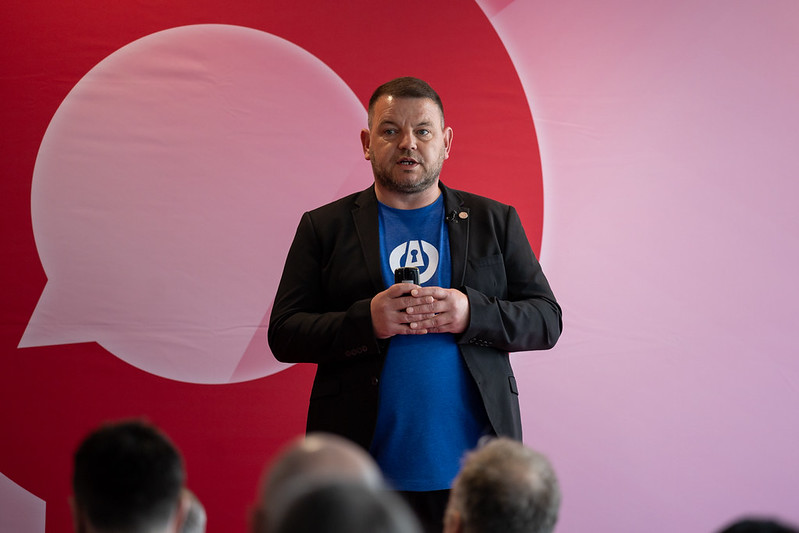
At a recent industry briefing hosted by Inspired Business Media, Ian Wood, Solution Engineering Lead at Commvault, analysed the shifting dynamics of modern digital warfare and introduced a proactive framework for merging security, infrastructure, and automated recovery into a unified operational discipline.
The New Landscape of Machine-Speed Threats
Modern security teams are facing an unprecedented combination of geopolitical and economic pressures. Globally, cybercrime has evolved into an industrialised economy projected to reach a value of $10.5 trillion, pacing as the world's third-largest GDP behind only the United States and China. This ecosystem is fueled by highly lucrative "Ransomware-as-a-Service" kits available for mere cents, alongside a global talent shortage of approximately 4.8 million unfilled cybersecurity roles.
Compounding this commercial threat is a sharp rise in nation-state operations, which currently account for roughly 39% of all global cyber attacks. Sophisticated groups, such as China's Volt Typhoon, frequently bypass standard financial ransomware tactics entirely. Instead, they focus on long-term pre-positioning and the deployment of destructive "wiperware" engineered specifically to compromise critical infrastructure and cripple national security networks.
Furthermore, as enterprises accelerate their adoption of Artificial Intelligence to automate business workflows, the operational attack surface has expanded exponentially. When organisations activate autonomous AI agents, their internal identity directories shift from handling millions of standard human transactions to processing over a billion machine-to-machine connections every single day. This shift introduces a critical vulnerability window: attacks no longer unfold at human deliberation, but at machine speed, rendering manual human intervention completely obsolete.
The Reality Gap in Enterprise Recovery
Despite massive corporate investments in defensive software, an intense reality gap persists in contemporary recovery readiness. While organisations spend millions proliferating point-defense tools, approximately 83% of enterprises are still forced to declare data breaches.
When a major compromise occurs, the operational fallout is often severe. On average, it takes an enterprise 24 days to recover minimum operational viability after a successful attack. For the vast majority of corporate boards, sustaining over three weeks of total operational downtime represents an unacceptable business risk that can easily trigger corporate insolvency.
This prolonged recovery timeline stems directly from two core deficiencies:
- The Myth of Native Cloud Resilience: Cloud architects frequently succumb to the "easy button" illusion, assuming that shifting data to a public cloud vendor automatically guarantees absolute resilience. In reality, under standard shared responsibility models, native cloud backup tools are entirely inadequate for complex cyber recovery, leaving corporate stacks vulnerable to sophisticated, synchronised deletion.
- Hyper-Fragmented Recovery Environments: Over time, large enterprises accumulate an unmanaged patchwork of legacy databases, SaaS platforms, and multi-cloud environments. Navigating a crisis with dozens of separate recovery principles, each tethered to its own unverified, isolated playbook, guarantees operational chaos during a live breach.
Implementing Resilience Operations (ResOps)
To bridge this gap and achieve true operational survival, enterprises must transition from fragmented tooling to an integrated discipline known as Resilience Operations (ResOps). ResOps represents the deliberate alignment of people, processes, and technology across security and infrastructure teams to ensure an organisation remains operational during a compromise.
An effective ResOps framework requires four continuous automated capabilities:
- Automated Discovery and Classification: The system must continuously scan multi-cloud and on-premise environments to automatically discover and attach resilience policies to new data assets the moment they are provisioned.
- Machine-Speed Anomaly Detection: Rather than waiting for ransomware to begin mass encryption, automated engines must monitor directory structures and identity environments (such as Active Directory or Entra ID) in real-time, instantly flagging unauthorised lateral movement or privilege escalation.
- Proactive AI Data Guardrails: To prevent corporate "self-harm," automated data barriers must actively intercept internal users who feed sensitive corporate IP or personally identifiable information (PII) into public Large Language Models, masking sensitive details in real-time.
- Rapid Clean-Room Recovery: Organisations must possess the automated ability to instantly restore compromised data and workloads into isolated, air-gapped sandbox environments. This allows forensic teams to verify and sanitise data, ensuring that when assets are reinstated to production, they are completely free of resident threat actors.
Replacing Compliance Tabletops with Operational Chaos
True cyber resilience cannot be validated through passive compliance checklists or overly controlled tabletop exercises where individuals comfortably discuss theoretical scenarios. To build genuine operational fitness, organisations must introduce real testing chaos into their response plans.
Security leaders should actively stress-test their incident response teams by injecting unexpected operational disruptions during simulations, such as assuming the primary backup architecture has been completely encrypted or that key administrative credentials have been revoked. Best-in-class enterprises systematically test components of their minimum viable footprint every quarter, ensuring that over a rolling 12-month window, the entire corporate core has proven its ability to rapidly recover under pressure. By shifting from a posture of hope to a disciplined model of continuous verification, modern enterprises can successfully turn raw data resilience into a measurable competitive advantage.
To learn more about standardising your automated recovery stacks or to participate in live crisis simulations, view our upcoming briefings on the Inspired Business Media event calendar..